24/7 emergency plumbing services: Text name, address and pictures to +1 (236) 233-9696
Backflow Testing, Repairs and Installation in Langley
If your property has a backflow assembly, it has to be tested every year by a certified tester, and the report has to be filed with your water purveyor. Miss it and the notices start - and eventually the water goes off.
Plumblink handles the whole thing. Annual testing, repairs when an assembly fails, and new installations. Red Seal certified, Technical Safety BC licensed, fully insured. We're available 24 hours a day, seven days a week, and there's no call-out fee.
If you're trying to work out whether you're even required to test, start with our guide to backflow testing requirements in Langley. If you already know you need a test booked, keep reading.
Annual Backflow Testing
Most assemblies need testing once a year, plus a test at installation and again after any repair or relocation.
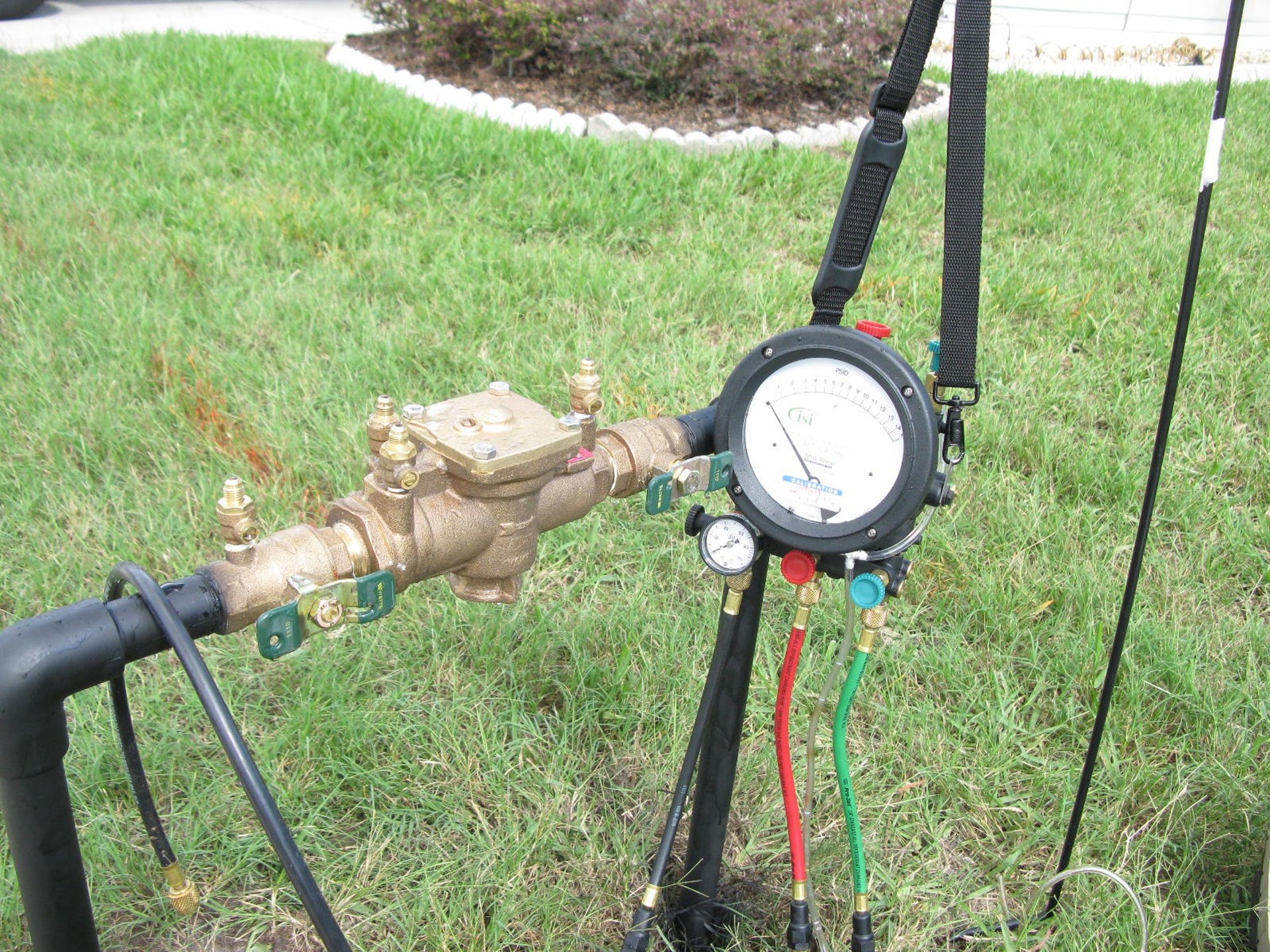
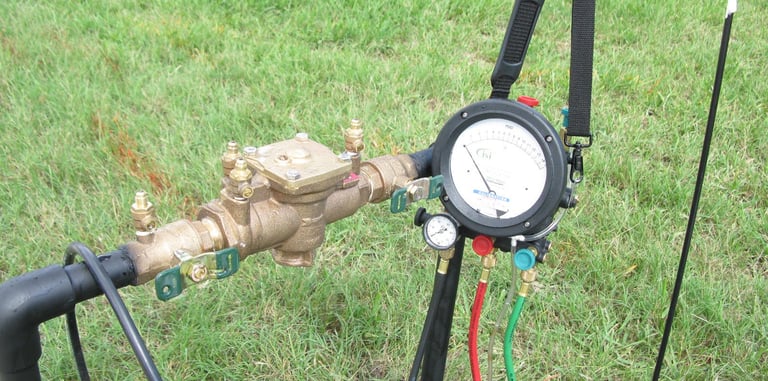
A test takes a differential pressure gauge, a certified tester and usually under an hour on a standard residential irrigation assembly. Water is off for part of that.
Larger commercial sites and multi-device buildings take longer, and we'll tell you the realistic window when you book rather than after we arrive.
Irrigation assemblies are usually tested at spring turn-on, when the system comes back under pressure after sitting all winter. If you want both done in one visit, say so when you book.
2. Each device is tested to spec
A differential pressure gauge goes on the test ports and the check valves and relief valve are measured against spec. Water is off for part of it.
A standard residential irrigation assembly is usually under an hour.
3. It passes or it doesn't
Passes
Tagged and dated on the spot.
Fails
Rebuilt and retested in the same visit where we have the parts.
4. The report gets filed
We submit the passing report to your water purveyor and send you your own dated copy. You shouldn't have to chase either one.
5. We remind you next year
Backflow testing is easy to forget for eleven months and urgent in the twelfth. We keep the date and reach out, so the reminder comes from us instead of the municipality.
1. We locate every assembly
Properties often have more than one testable device, and the second one is usually the one nobody knew about. We identify all of them before we start.
Available 24 hours a day, seven days a week.
No call-out fee.
Backflow Repairs and Rebuilds
A failed test usually doesn't mean a new assembly. Most failures are worn rubber - check valve seats, springs, a tired relief valve diaphragm - and a rebuild kit costs a fraction of a replacement.
We carry rebuild parts for the common models, so where we can, we repair and retest in the same visit. That's one trip instead of two, and one call-out instead of two.
When replacement is the honest answer:
Cracked body, almost always freeze damage on an assembly that wasn't winterized
Obsolete model with no approved parts available
Wrong type of assembly for the hazard it's protecting - this occasionally surfaces on a first test
Either way, the assembly gets retested after the work and the passing report gets filed.
New Backflow Preventer Installation
New assemblies get installed for a few reasons: a new irrigation system, a boiler or hydronic loop going in, a municipal notice on a property that never had one, or a hazard reclassification that requires a different device.
We handle sizing, device selection for the hazard level, placement, and the commissioning test that has to happen at installation.
Placement matters more than people expect. An assembly stuck in an exposed spot is an assembly that fails its spring test after the first hard frost. We install with winter in mind - heated space where possible, proper insulation and drainage where it isn't.


Your water is supposed to flow one direction: from the city main, into your building, out through your fixtures.
Backflow is when that reverses and non-potable water gets pushed or pulled back into the drinking water supply.
It happens two ways:
Backpressure. The pressure inside your system becomes greater than the pressure in the city main. Boilers, pumps, and tall buildings can all do this. The higher pressure pushes water backward into the main.
Backsiphonage. Pressure in the city main suddenly drops — a water main break, a fire hydrant opening — and the resulting vacuum siphons water backward out of your building.
Either way, whatever's in your irrigation lines, boiler loop, or process equipment can end up in the drinking water. That's the reason the testing requirement exists.
What backflow actually is
If your property has a testable backflow prevention assembly, your municipality requires it to be tested by a certified tester and a passing report filed, usually every year
Did you get a notice to test your backflow assembly?
It isn't optional, and it isn't something a general handyman can sign off on. The test has to be performed by a certified backflow assembly tester using calibrated equipment, and the report goes to the municipality.
We do the test, we do the repair if it fails, and we file the paperwork. Call (236) 233-9696.
Backflow preventer vs. backwater valve they're not the same thing
This trips people up constantly, and it's worth being clear about, because the two devices do opposite jobs.
A backflow preventer protects your drinking water. It's installed on the potable water supply, and it stops contaminated water from reversing back into the clean water system. These are testable assemblies — RP, DCVA, DCDA, PVB — and they're the devices your municipality requires you to test.
A backwater valve protects your basement. It's installed on the sewer or drainage line, and it stops sewage from backing up into the building when the municipal sewer surcharges. It's a flap valve. It has nothing to do with drinking water and it isn't part of cross-connection control.
If you got a letter from the Township about annual testing, they're talking about a backflow preventer. If your basement floods with sewage in a heavy rain, you're thinking about a backwater valve.
We install and service both. Just different problems.
Property's we test in langley
Requirements vary by municipality and by hazard level - our guide to backflow testing requirements in Langley covers whether you're on the hook. If you already know you are, these are the assemblies we test:
Irrigation and lawn sprinkler systems - the most common residential trigger; fertilizer and pesticide are the hazard
Other residential assemblies - hot tub and pool fill lines, water softeners, radiant floor heating
Boilers and closed-loop mechanical systems - glycol and treatment chemicals
Commercial and industrial buildings - premise isolation at the service connection
Stratas and multi-family buildings - every device tested in one scheduled visit, reports filed together
Restaurants and food service
Medical and dental offices,
salons, laundromats and car washes
Agricultural properties and any auxiliary water supply - a well, cistern or pond alongside a municipal connection. Common across the Township.
Red Seal certified
Willem is a Red Seal certified plumber with over 30 years in the trade, licensed, insured, and WorkSafeBC covered. Backflow assembly testing is a certified specialty and we hold the certification to do it.
What You Get With Every Test
A test performed by a certified backflow assembly tester
The report filed with your water purveyor, not left for you to chase
Your own copy of the report, dated, with the certification number on it
A tagged assembly
A straight answer if it fails, and a repair quote before we do anything
Keep your copy.
If a device is ever found untested, a dated report is a much stronger position than "my plumber did it."
Got a Notice to Test?
If your municipality has sent a notice with a deadline, or your water is already off pending a passing test, say so when you call and we'll prioritise the visit.
The test has to be performed by a certified backflow assembly tester using calibrated equipment, and the report goes to the municipality. It isn't something a general handyman can sign off on. We do the test, we do the repair if it fails, and we file the paperwork.
We're available 24/7 and run emergency plumbing around the clock, so a compliance deadline doesn't have to wait for a weekday.
Backflow preventer or backwater valve?
Two different devices that get mixed up constantly.
A backflow preventer protects your drinking water and sits on the potable supply - RP, DCVA, DCDA, PVB.
That's what your municipality's annual testing notice is about.
A backwater valve protects your basement, sits on the sewer line, and stops sewage backing up during a surcharge.
We install and service both. Just different problems.
Annual test reminders
Backflow testing is one of those obligations that's easy to forget for eleven months and then urgent in the twelfth. We keep a record of when your assembly was last tested and reach out when the next one is due, so the reminder comes from us rather than from the municipality.
Ask us to put you on the list when we test.
What Affects the Cost
Backflow work is billed hourly with a one-hour minimum and 30-minute increments after that. What moves the number:
How many assemblies are on the property - a single irrigation device is very different from a commercial building with six
Assembly size and type - larger and higher-hazard devices take longer to test
Access - an assembly in a crawlspace, a locked mechanical room or behind stored goods adds time
Whether it passes — a failed test means a rebuild, parts and a retest
Whether it needs winterizing or spring turn-on at the same visit
No call-out fee. You pay for the work, not for us showing up. We're also 10% off for customers aged 60 and over. Full rates are on our plumbing labour rates page, or request a quote and we'll give you a number for your specific setup.
Why Plumblink?
Plumblink is a Red Seal certified plumbing service with over 30 years in the trade, licensed, insured, and WorkSafeBC covered. Backflow assembly testing is a certified specialty and we hold the certification to do it.
Credentials
Red seal certified
Technical Safety BC licensed
Fully insured, WorkSafeBC covered


How we work
Available 24 hours a day, seven days a week
No call-out fee
Repair and retest in one visit where the parts allow
Also handled
Backflow Reviews
Read our client experiences with our plumbing services and solutions.
Frequently asked questions
How soon can you come out for a backflow test?
Usually within a few days for a routine annual test. If you're facing a shut-off deadline, tell us when you call and we'll move you up - we're available 24/7.
How often does my backflow assembly need testing?
Your municipality sets the schedule and will send you a notice with your deadline. If you've lost the notice or aren't sure, call us and we'll help you sort it out.
What if it fails the test?
Failures are common - these are mechanical devices that wear. Most are a rebuild rather than a full replacement. We'll tell you which, do the repair, retest, and file the passing report.
What does a backflow test cost?
It's hourly with a one-hour minimum, and it depends on how many assemblies you have and how accessible they are. No call-out fee. Request a quote and we'll price your specific setup.


Backflow Testing, Repair & Installation Quote
Book your backflow test, or request a quote for repair or installation.
24/7 emergency plumbing services. Give us a call anytime and we'll be there to help.
Langley, BC, Canada
Plumblink Plumbing Inc.